
Will Today’s Communications Survive a World Conflict?
Modern life depends on instant communication. From emergency services and power grids to banking, transportation, and news, nearly everything we rely on assumes that phones work, the internet stays up, and information keeps flowing. But if a large-scale world conflict were to break out, how much of today’s communications infrastructure would actually survive?
The short answer: some of it would—but not in the way we’re used to. Communications wouldn’t disappear overnight. Instead, they would degrade, fragment, and become far more local.
A System Built on Layers
Today’s communications stack is built in layers. At the bottom are physical assets like fiber-optic cables, cell towers, satellites, and data centers. Above that are networks and routing systems, then cloud platforms and apps, and finally the devices we use every day.
When conflict stresses the lower layers—power, fiber, towers—everything above them begins to fail. And in a global conflict, multiple layers would be under attack at the same time.
Physical Infrastructure: Easy to Target, Hard to Repair
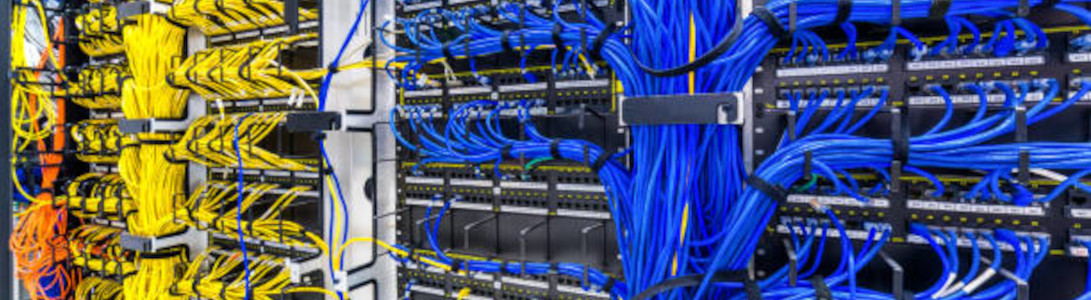
Global communications rely heavily on undersea and terrestrial fiber-optic cables. These cables follow known routes and are difficult to repair quickly, especially during wartime. A few well-coordinated disruptions could isolate entire regions.
Cell towers are another weak point. They depend on power, backhaul connections, and centralized network control. In conflict zones, towers are often damaged or shut down, sometimes deliberately and sometimes as collateral damage.
Large data centers—while well protected—also concentrate enormous capability into fixed locations. Power loss, cooling failures, or cyber-physical attacks can take entire platforms offline.
Power: The Critical Dependency
No modern communication system works without electricity. Backup batteries and generators help, but most are designed for hours or days—not weeks. Prolonged power outages would quickly silence cellular networks, internet service providers, and satellite ground stations.
In many scenarios, the power grid—not the communications equipment itself—would be the first point of failure.
Satellites: Helpful, but Contested
Satellites provide global coverage and can bypass damaged ground infrastructure, making them extremely valuable during conflict. However, they are not invulnerable. Jamming, spoofing, ground station attacks, and anti-satellite weapons all pose serious threats.
In a major conflict, space itself would likely become a contested domain, reducing the reliability of GPS, satellite phones, and satellite internet.
What Happens to the Internet?
The internet was originally designed to route around damage, and in many places it still can. Local and regional networks would likely continue operating where infrastructure remains intact.
What would suffer most are global services—cloud platforms, social media, centralized authentication systems, and real-time applications. The internet wouldn’t vanish, but it would fracture into regional islands, sometimes referred to as a “splinternet.”
Cyber Warfare: The Invisible Front
Modern conflicts are fought in cyberspace as well as on land, sea, and air. Cyber attacks can disable communications without destroying a single piece of hardware. Networks may be shut down intentionally to prevent compromise, adding to the disruption.
Even systems that physically survive may be taken offline for security reasons.
Old Technologies Still Matter
Broadcast radio remains one of the most resilient forms of communication. AM, FM, and especially shortwave radio can reach large audiences with minimal infrastructure. Receivers are inexpensive, power requirements are low, and broadcasts don’t rely on user authentication or return paths.
When modern systems fail, broadcast radio often becomes the primary source of public information.
Amateur Radio: Built for Resilience
Amateur radio stands out because it is decentralized, flexible, and largely independent. Individual operators can generate their own power, choose from multiple bands and modes, and communicate without relying on centralized infrastructure.
History has shown—time and again—that amateur radio continues to function after disasters and during periods of widespread disruption. In a world conflict, it would likely remain viable at the local and regional level long after commercial systems falter.
The Bottom Line
In a global conflict, today’s communications infrastructure would not fail all at once—but it would not remain intact either. Highly centralized, power-hungry, globally synchronized systems would be the first to struggle.
The systems most likely to survive are those that are simple, decentralized, and locally controlled. In that sense, the future of communication in a crisis may look surprisingly familiar: radios, local networks, and people who know how to operate without the cloud.
Resilience doesn’t come from complexity—it comes from independence and adaptability.
© 2026 Radio Society of America