
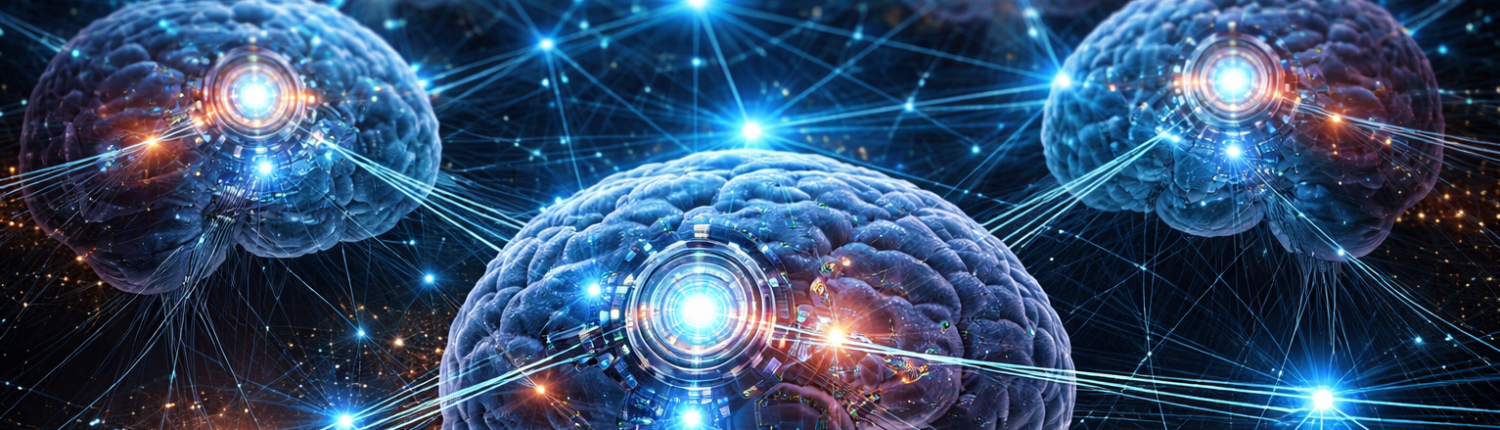
Neural Transceivers, Neural Mesh Networks, and the Industrialization of Thought
Neural Transceivers and the Streaming of Thought:
From 1939 Propaganda to Algorithmic Influence in the Age of Implants
Introduction: When Thoughts Become Data
Neural transceivers—implantable or wearable devices capable of reading, transmitting, and potentially influencing neural activity—are often presented as the next inevitable leap in human–machine integration. Proponents describe a future where thoughts stream seamlessly into digital systems, enabling instant communication, enhanced cognition, and unprecedented situational awareness.
Yet beneath the promise lies an uncomfortable question: what happens when thought itself becomes a networked resource—measured, optimized, filtered, and shaped by algorithms designed by others?
Historical Parallels: 1939 and the Industrialization of Influence
In 1939, Adolf Hitler’s regime demonstrated that control of information could translate into control of thought. Radio broadcasts, mass rallies, repetition, emotional framing, and engineered narratives were not merely propaganda—they were early forms of psychological infrastructure.
Today’s environment differs in form, but not function. Modern influence systems target individuals, not crowds, using algorithms, personalization engines, and data-driven persuasion. Neural transceivers represent the escalation from influencing perception to influencing cognition itself.
What Is a Neural Transceiver?
A neural transceiver reads neural signals, converts them into digital data, streams them to external systems, and optionally provides feedback through neural stimulation. Once neural signals are digitized, they can be analyzed, classified, reinforced, or suppressed.
Thought Streaming and Algorithmic Conditioning
Thought streaming promises efficiency, but its real power lies in feedback. Algorithms can learn which emotional states correlate with compliance or dissent and subtly nudge cognition. Thought becomes programmable, while autonomy feels intact.
Political Agendas in a Post-Propaganda World
Modern propaganda arrives disguised as wellness, safety, and optimization. Neural systems could reduce discomfort associated with certain political ideas while reinforcing others—quietly shaping alignment without overt force.
Neural transceivers would be marketed as upgrades: faster learning, better decisions, financial success, and emotional mastery. Opting out would not be forbidden—just disadvantageous.
Situational Awareness and Military Use
Military applications promise real-time emotional monitoring, silent coordination, and life-saving awareness. Yet they blur the line between support and surveillance, efficiency and conscience.
Domestic Life and Humor
In civilian life, neural implants introduce new challenges. Couples discover that one partner truly processes multiple mental channels at once, while the other runs single-task firmware. Arguments occur silently—and definitively.
The Neural Mesh Network: When Thought Is No Longer Private
Neural mesh networks extend transceivers into shared cognitive systems. Individual minds become nodes. Thought becomes data objects interpreted, weighted, and acted upon by machines and others.
How the Mesh Works
Neural signals are standardized, interpreted by algorithms, and propagated as executable actions. Language becomes unnecessary. Thought itself becomes operational.
Collective Cognition
In a mesh, concern becomes alerts, doubt becomes risk metrics, and moral hesitation becomes system friction. Speed replaces deliberation.
Political Power in a Mesh Society
Power operates by deciding which thoughts propagate. Dissent fades not through suppression, but through irrelevance.
Military and Emergency Meshes
Mesh systems enable synchronized units, early distress detection, and organism-level coordination—at the cost of individual moral pause.
Civilian Mesh Life
Marketed as collaboration and transparency, mesh living erases misunderstanding—and privacy. Society becomes harmonized by algorithm rather than consensus.
The Ultimate Risk
When systems can predict and act on intent before conscious choice, the boundary between thinking and doing dissolves.
Conclusion:
We must recognize the full impact of the above concepts in relationship to our own free will to make informed, intelligent, and choice in our best interest.